1
/
of
2
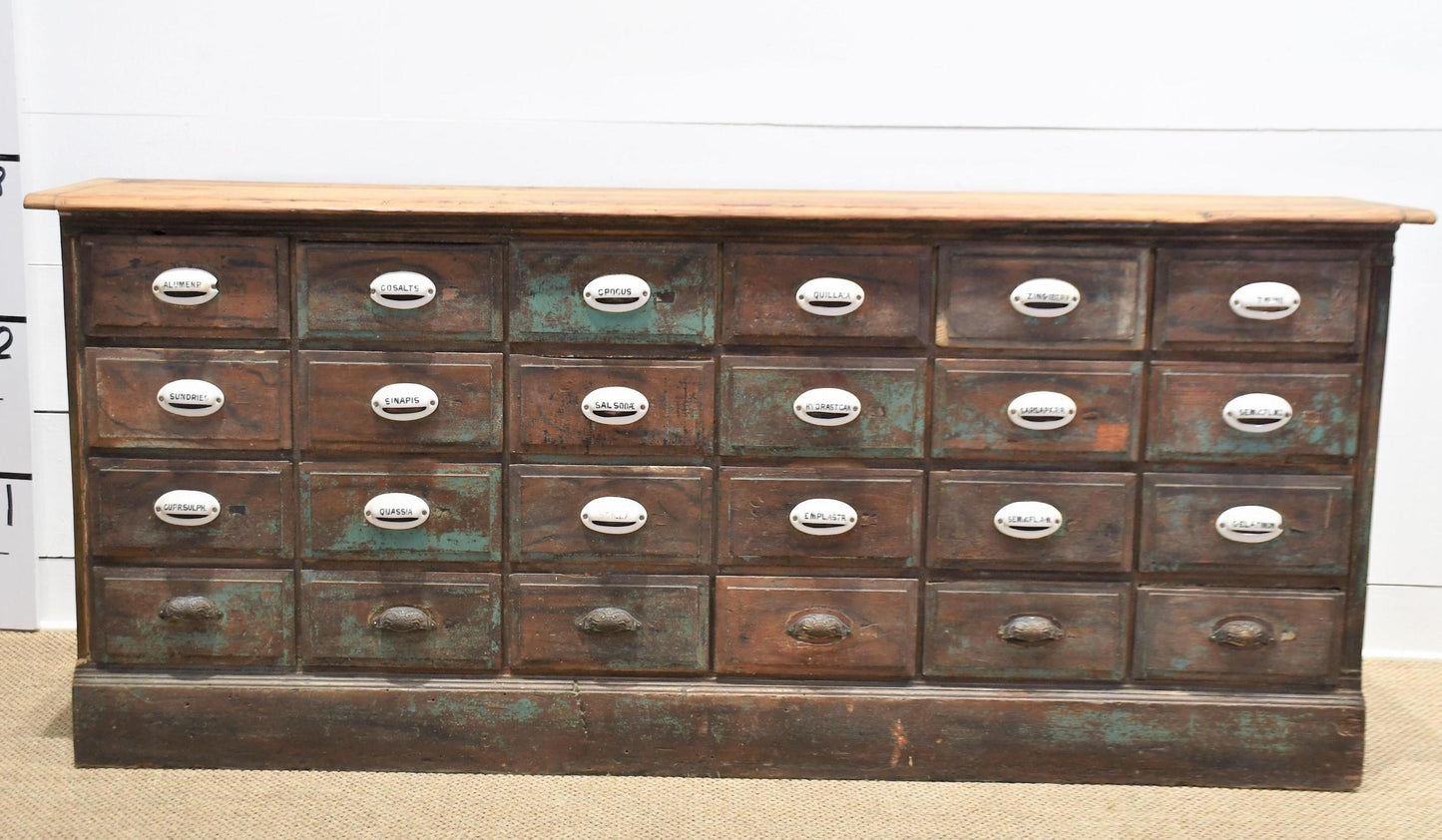
24 Drawer Painted Antique Apothecary Cabinet / Island
24 Drawer Painted Antique Apothecary Cabinet / Island
SKU:
SKU:14770
1 in stock
Regular price
$ 7,700.00 USD
Regular price
Sale price
$ 7,700.00 USD
Unit price
/
per
Shipping calculated at checkout.
Contact to purchase
24 Drawer Painted Antique Apothecary Cabinet / Island
Dimensions are 36"High X 83.5" Wide X 16" Deep
The writing on the labels consists of traditional Latin pharmaceutical terms used by 19th-century pharmacists (apothecaries) to classify raw medicinal herbs, chemical minerals, and compound preparations.
The Drawer Labels & Their Meanings
Instead of modern commercial drug names, these porcelain labels name the specific botanical or chemical ingredients stored inside each drawer:
- ALUMEN: Alum (Potassium alum), a naturally occurring mineral crystal commonly used in historical medicine as a powerful astringent to stop bleeding or as a topical antiseptic.
- SINAPIS: Mustard seed (usually Sinapis nigra or black mustard). Apothecaries ground this into a powder to create topical "mustard plasters" (counter-irritants) to treat chest congestion, muscle aches, and colds.
- SAL SODA: Sodium carbonate (washing soda or soda ash). It was used historically in the compounding of effervescent medicinal powders, antacids, and early skin-cleansing washes.
- ZINGIBER: Ginger root. This was a core botanical treatment used to calm upset stomachs, ease nausea, and act as a warming digestive aid.
- CROCUS: Saffron (derived from Crocus sativus). Historically, saffron was used not just as a dye, but as a sedative, an emmenagogue, or a remedy for treating measles and scarlet fever.
- QUILLAY: Soapbark (from the Quillaja saponaria tree). It contains high amounts of saponins and was used by pharmacists to make expectorant cough syrups or foaming emulsifiers.
Historical Context & Design
- Material & Build: The cabinet is constructed from solid European pine with a thick, flat top work surface. This layout allowed the pharmacist to weigh, crush, and mix raw materials directly on top of the counter using a mortar and pestle.
- Patina & Finish: It features a heavily distressed, "chippy" paint finish showing layers of dark wood tone mixed with aged sea-green or teal verdigris paint. This wear is typical for functional laboratory and shop furniture exposed to moisture and daily handling over many decades.
- Hardware: The top three rows utilize white oval porcelain label pulls featuring crisp black typography. The bottom row deviates with ornate, heavy cast-metal cup pulls, which were typically reserved for larger, heavier drawers holding bulk utility tools or weights rather than specific botanical jars.
Share